
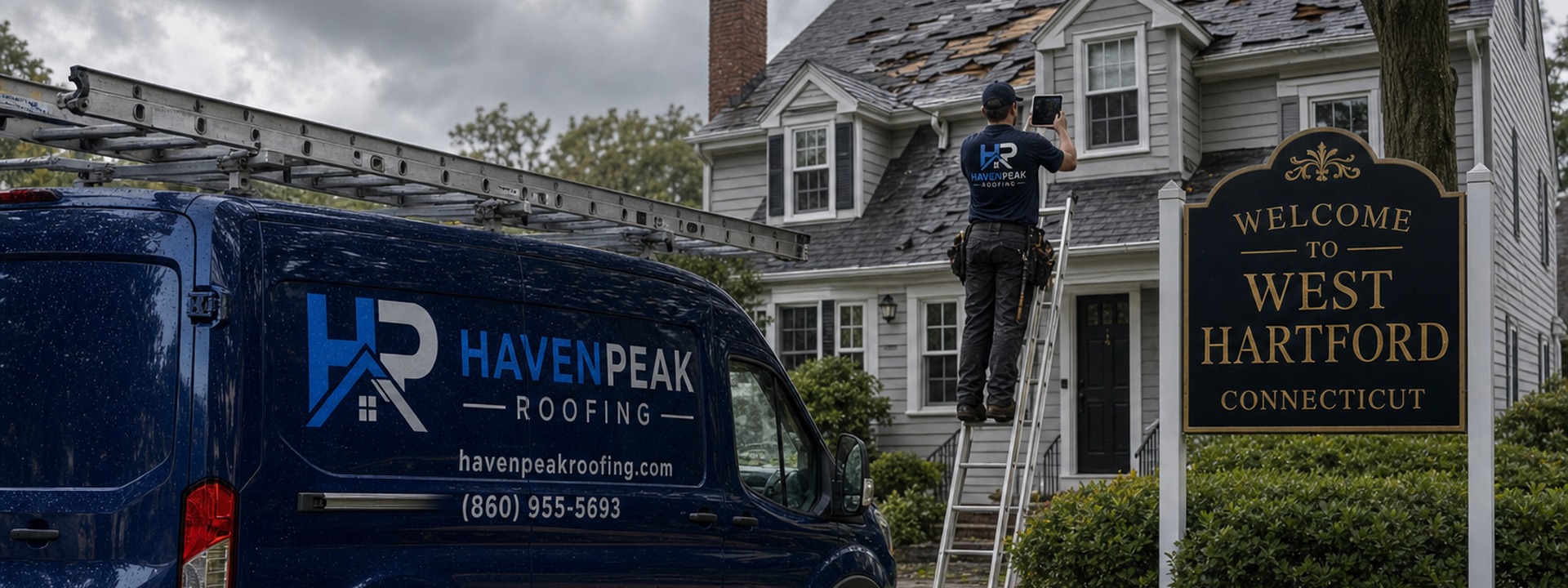
Storm Damage Roof Repair After Connecticut Weather
After nor’easters, ice storms, and severe wind, Greater Hartford roofs need careful documentation and repair—not rushed patches that miss hidden deck harm. We assess what changed in the storm versus what was already worn.
How Different Storms Damage Roofs Here
Wind lifts shingle tabs and creases ridge caps on exposed slopes facing west and south. Hail bruises mat surfaces and loosens granules, weakening UV protection even when leaks are not immediate.
Ice storms add weight and break branches that puncture membranes on porch roofs. Freeze-thaw after partial melting opens nail holes on older three-tab systems common in 1970s West Hartford ranches.
Each storm leaves a signature; matching repair to that signature prevents paying for unrelated pre-existing wear.
Visible Signs of Storm Impact
Ground clues help prioritize which slopes need up-close review.
- Missing or creased shingles along rakes and ridges
- Granule piles at downspouts after hail
- Bent or detached gutters and drip edge
- Tree debris in valleys and punctures on flat sections
- Interior stains appearing one to three days after wind-driven rain
Photos and Records Worth Keeping
Date-stamped exterior photos from multiple angles support insurance discussions and contractor scoping. Include close-ups of individual damaged tabs and wide shots showing slope context.
Interior photos of stains and damp insulation belong in the same folder. Save weather service alerts for the event date—useful when adjusters ask about timing.
We add labeled inspection photos during our visit so your records stay organized beyond phone snapshots.
Keep receipts for buckets, fans, and interior drying; some policies reimburse mitigation.
Temporary Dry-In After Storm Openings
Openings from fallen limbs need tarping or membrane patches before the next rain. Proper anchoring avoids tearing undamaged shingles while covering the breach.
Temporary work is not the final repair; it buys time for matching materials and scheduling tear-off if a slope is totaled.
On occupied homes, we coordinate tarp placement to minimize interior noise and explain how long temporary covers should remain before permanent work.
Storm Inspection Process
We walk slopes when safe, note test-square findings on asphalt where applicable, and correlate interior stains with exterior damage. Soft deck spots near impacts get probed carefully.
Distinguishing fresh creases from old brittle shingles prevents inflated scopes. We mark boundaries between storm-affected and sound areas for partial repairs.
Flat commercial sections receive drain and seam review—ponding after storms often reveals clogged drains rather than membrane failure.
We note gutter dents that redirect water behind fascia—storm evidence beyond shingles alone.
We check prior repair patches for fresh moisture at edges—a sign the wrong layer was sealed.
Repair vs. Slope Replacement After Storms
Isolated wind damage on a young roof often repairs with matching shingles and replaced ridge components. Widespread hail bruising or multiple impacts per square may justify slope replacement.
Flashing torn loose at chimneys gets rebuilt to code, not just caulked. Tree impacts through decking require sheathing replacement before new covering.
We write scopes that match actual damage so you can compare bids fairly.
Matching ridge vent sections after wind events prevents future blow-offs at the same joint.
Integrated repair means removing enough courses to lap underlayment correctly—not surface patches only.
Working With Adjusters and Claims
We provide factual documentation—photos, measurements, and repair scopes—not inflated damage reports. You choose whether to file a claim; we do not adjust on your behalf.
Matching shingle color on partial repairs can be challenging; we note manufacturer discontinuations early so discussions with carriers stay realistic.
Emergency temporary work should be documented separately from permanent repair invoices for clarity.
Common Post-Storm Mistakes
Rushing decisions after storms often costs more later.
- Signing with out-of-area crews who will not return for follow-up
- Replacing entire roofs when only one slope sustained wind damage
- Ignoring small punctures on flat porches until interior stains appear
- Caulking over torn flashing instead of rebuilding the joint
- Skipping attic checks for deck bruising after hail
Local Storm Patterns and Housing Stock
Tree-lined streets in Westmoor Park and Bishop’s Corner see more limb impact than open subdivisions off South Main. Hilltop homes catch higher wind gusts along the Metacomet ridge approaches.
Older colonials with slate or wood accents mixed with asphalt need careful matching when storm repair touches visible street elevations.
Town permitting after major repairs keeps records straight for future sales— we handle filings when required.
Storm Damage FAQ
You May Also Need
Emergency Roof Repair
Urgent leak control and stabilization when water is entering
Roof Repair
Localized roof repair for leaks, wear, and storm damage in Greater Hartford
Roof Inspection
Pre-purchase, seasonal, and post-storm roof assessments
Asphalt Shingle Roofing
Architectural shingle repair and replacement systems
Request Storm Damage Review
Include the storm date, your address, and photos if you have them.