
Quick Answer
When water is entering your home, move people and valuables away from the drip line, avoid wet electrical areas, and contain water with buckets and towels. Do not climb an icy or wet roof. Call a licensed roofer for emergency tarping if rain or thaw is forecast. Photograph stains and damage before cleanup for insurance records.
The First Hour: Safety and Containment
A roof leak during a Connecticut winter behaves differently than a summer drip. Cold attics keep insulation damp for days; water travels along joists and rafters before it shows on drywall. The first priority is keeping people safe—not finding the hole from a ladder in the dark.
Move furniture, electronics, and documents away from active drips. Place buckets or plastic totes under stains and lay towels or tarps on floors even if the ceiling looks intact. Water often spreads along framing before it bulges visibly. If a bulge appears in the ceiling, puncturing it from below with a controlled drain into a bucket can prevent a sudden collapse—but only if no electrical fixtures are nearby.
Keep attic access closed unless you can stand safely on a floor joist path without touching wet insulation near wiring. Attic electrical boxes, junction points, and exposed Romex near moisture are shock hazards. If water is near outlets, panels, or ceiling fixtures, avoid the room and mention electrical exposure when you call for help.
What Not to Do on the Roof
Homeowners understandably want to stop water at the source. In January, that impulse causes falls and secondary damage. Icy shingles, wet decking, and steep colonial pitches common in West Hartford and neighboring towns are not safe for untrained climbers—even with a good ladder and a tarp in the garage.
Plastic sheeting taped from inside the attic rarely seals against wind-driven rain and can trap moisture against decking. Caulk squirted at a suspected exterior crack from a second-story window rarely reaches the actual entry point. Water travels sideways under shingles; the exterior stain you see may sit several feet from where water enters the attic.
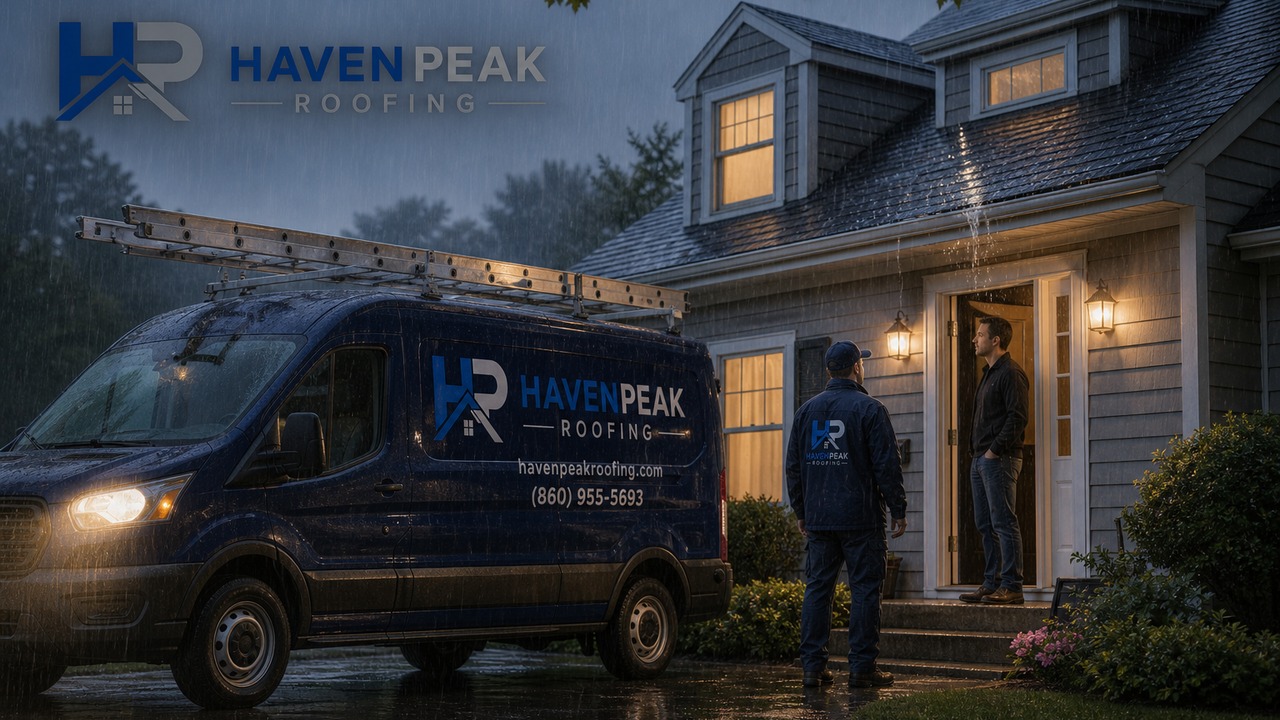
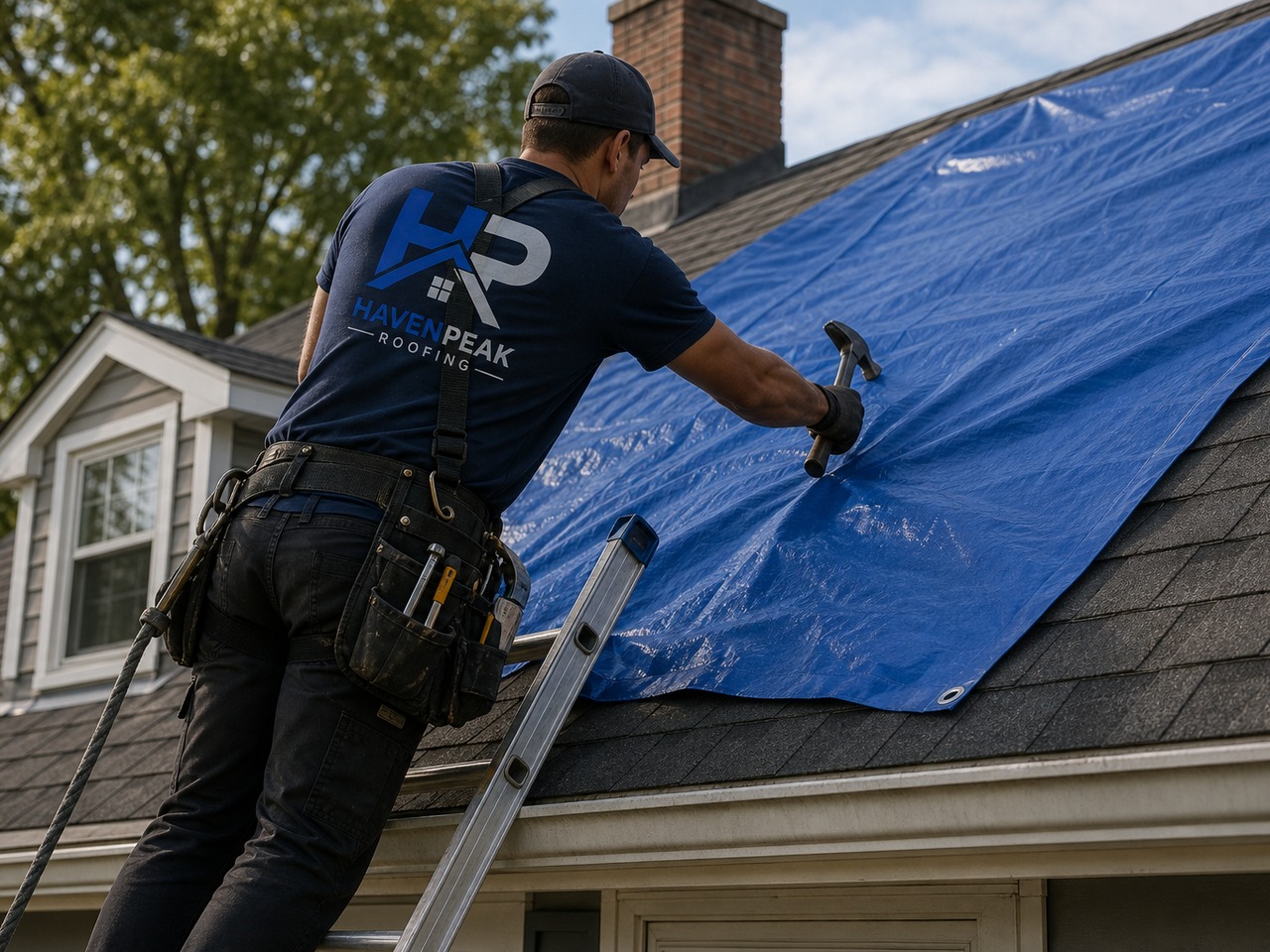
Professional emergency stabilization uses proper anchor points, weighted tarp methods, and knowledge of where water is actually penetrating. Our emergency roof repair crew prioritizes active interior water when scheduling from our West Hartford office. Describe which rooms are affected and whether water is still entering during rain.
Protecting Interiors and Insulation
Moderate heat in affected rooms is fine; aggressive space heaters aimed at wet ceilings without fixing the roof trap moisture in insulation and drywall. If you can access the attic safely, look for active dripping and place a bucket under the drip path—but do not disturb wiring or step through ceiling drywall.
Wet fiberglass insulation loses R-value and can hold water for weeks in a cold attic. Compressed or stained batts near the leak path should be flagged for replacement during permanent repair. Mold growth slows in winter cold but saturated materials still need drying once the roof is sealed.
Photograph ceiling stains, floor damage, and belongings before you move items or clean up. Note the date and recent weather—whether a thaw followed heavy snow, or a rainstorm arrived after ice buildup. That timeline helps roofers trace mechanisms and supports insurance documentation when sudden damage is involved.
Common Winter Leak Causes in Greater Hartford
Ice dam backup along north-facing eaves is the most frequent winter call in Hartford County suburbs. Meltwater travels under shingles and along the deck until it finds a path inside—often at exterior walls, not directly above the ceiling stain. Homes in Glastonbury, Simsbury, and West Hartford with mature tree cover see this pattern every February.
Wind-lifted ridge caps and torn shingle tabs admit driving rain during nor'easters. Failed pipe boots stiffen after fifteen winters and crack during cold snaps. Chimney step flashing loosens after years of freeze-thaw cycling. Low-slope porch tie-ins on split-levels in Newington and Wethersfield often leak at the transition before field shingles show obvious wear.
Emergency tarping stabilizes the situation; permanent leak repair targets the actual failure mechanism. A roofer should inspect the attic path, exterior penetrations, and eave conditions—not only the stain location inside.
When to Call for Professional Help
Call immediately when water is actively entering occupied rooms, when drips are near electrical fixtures, or when a large ceiling section is sagging. If dry weather is forecast for several days, schedule inspection promptly—but do not delay through a forecast rain or thaw event with open penetration.
Renters should notify landlords or property managers in writing the same day. Condominium owners should alert association management when the source may be common roof area. Responsibility varies by governing documents; documentation protects everyone while the leak is traced.
After stabilization, plan permanent repair during weather-suitable windows. Asphalt shingle work often waits for warmer bonding temperatures unless the fix is under a properly installed tarp. Schedule a roof inspection from our West Hartford office or call (860) 955-5693.
Documentation for Insurance and Follow-Up
Reasonable mitigation after sudden damage is usually expected by carriers—professional tarping, interior containment, and prompt inspection. Keep receipts and dated photos of stains, damaged belongings, and exterior conditions before cleanup. Note whether a named storm or thaw event preceded the leak; your policy language determines coverage, not the roofer.
Separate pre-existing wear from new damage honestly. Adjusters compare granule loss, prior patch areas, and maintenance history against post-event findings. Documentation that shows you responded quickly and professionally helps legitimate claims and repair-only decisions alike.
After the roof is sealed, monitor ceilings through the next few rain cycles. Persistent staining may mean water path was misidentified or secondary saturation is still drying. A follow-up inspection confirms the entry point was corrected before you close out insurance files or repaint interiors.
Related reading
Related service: Learn more about this roofing service.
Related guide: Common Causes of Roof Leaks in Hartford County Homes.
FAQ
No. Icy, wet, or steep roofs cause serious falls. Contain interior damage and call a licensed roofer for exterior assessment and tarping.
Moderate room heat is fine, but do not blast heat at wet ceilings without fixing the roof. Trapped moisture damages insulation and framing.
Many policies cover reasonable mitigation after sudden damage. Photograph everything and keep receipts; your carrier interprets coverage.
Water travels along decking and joists before it drips inside. The entry point on the roof is often uphill or sideways from the interior stain.
We prioritize active interior water when scheduling from West Hartford. Call with your address, affected rooms, and whether water is still entering.
Need help with your roof in Connecticut? Contact HavenPeak Roofing for a free estimate or call (860) 955-5693. We serve West Hartford, Greater Hartford Area, and nearby Connecticut communities.
Browse our Roofing Insights hub and Roofing Solutions catalog for more Connecticut winter guides, emergency services, and city-specific roofing pages.