
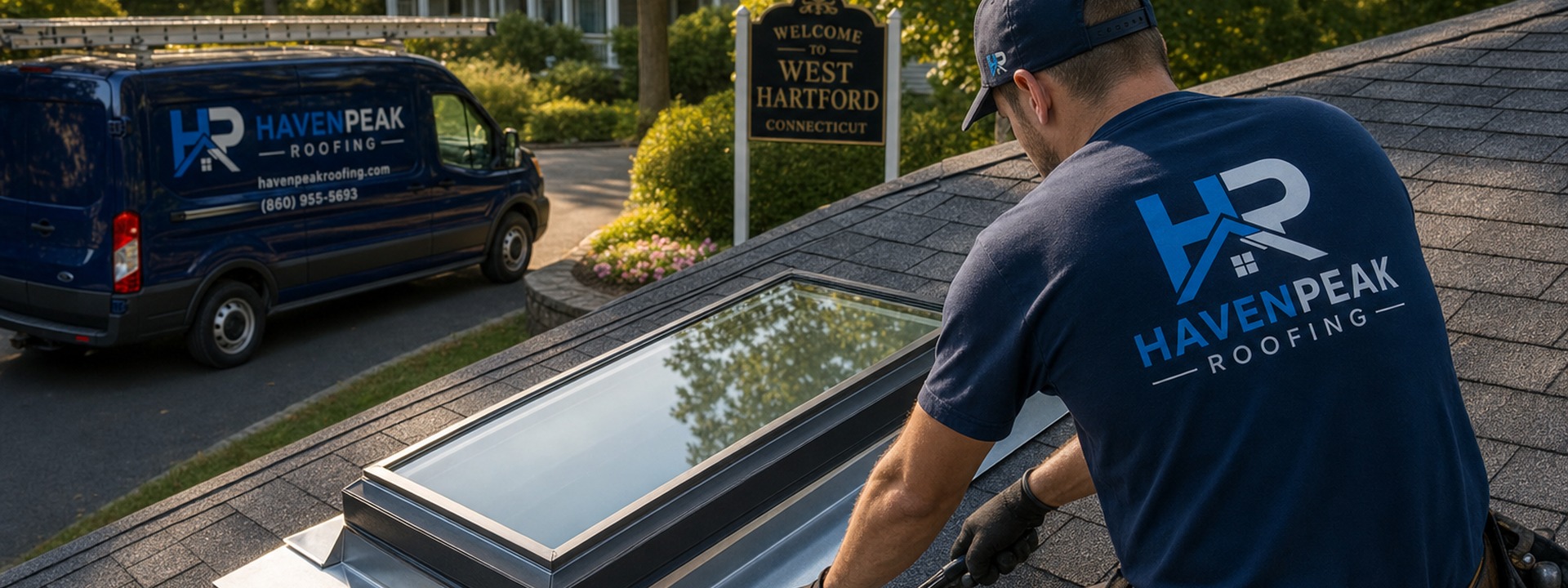
Skylight Leaks: Flashing, Units, and Condensation
Skylight leaks are not always roof leaks. Water can enter at curb flashing, failed domes, or interior condensation on cold glass. We diagnose the path before recommending a new unit or targeted flashing work on West Hartford homes.
How We Diagnose Skylight Problems
We start indoors: stain location, seasonality, and whether moisture appears on glass versus drywall edges. Attic review checks for daylight at curbs, wet insulation pockets, and exhaust air hitting the skylight well.
On the roof we inspect step flashing integration, headwall seals, and dome or glass unit condition. Photos distinguish drip paths from condensation streaks.
Older tube skylights and curb-mounted units fail differently; age and brand guide next steps.
Flashing Failure vs. Unit Failure
Flashing problems show as leaks only during wind-driven rain along the uphill side. Unit seal failures may weep in gentle rain or after snow melt when ice dams back water up.
Cracked domes, fogged insulated glass, and failed factory gaskets point to unit replacement even when surrounding shingles are sound.
Reflashing without replacing a failed unit wastes effort; we match the fix to the actual component.
When Moisture Is Not a Roof Leak
Winter condensation on cold glass drips into wells and stains ceilings below. Bath and kitchen humidity worsens the effect in tight bathrooms with skylights.
Improved ventilation, insulated curbs, and sometimes unit upgrades with better thermal breaks reduce condensation. We explain humidity control alongside roof work.
Distinguishing condensation from intrusion prevents unnecessary roof tear-off.
Running a bath fan during showers reduces winter drip on glass below skylights.
Skylight Replacement Scope
Replacement includes removing the unit, inspecting curb decking, installing ice and water membrane at the opening, new flashing kits integrated with shingles, and the specified unit with proper insulation.
Sizing changes may need framing adjustments; we note structural limits before ordering.
Interior trim repair is often a separate finish trade after roof work dries the assembly.
Recommended Timing for Skylight Work
Moderate temperatures help sealants and shingle integration.
- Plan replacements before winter when openings must stay dry overnight
- Address active leaks with temporary cover until full replacement schedules
- Coordinate interior painters after roof completion
- Order custom-size units early—lead times vary
- Avoid heavy snow periods for curb work on steep colonials
Skylight Context in Local Homes
1970s–90s ranches in Elmwood and split-levels in the Acre often have original plastic domes past service life. Newer vaulted ceilings near West Hartford Center use larger glass units sensitive to wind exposure on open lots.
Tree shade reduces UV on domes but keeps surfaces cool—condensation risk rises in shaded baths.
Townhomes with shared roofs need neighbor notice before crane or ladder staging blocks driveways.
Vaulted ceilings in newer West Hartford builds use larger units with higher wind exposure.
Nor'easter wind drives rain uphill at headwalls on homes facing open western lots.
Townhome rows may share downspout runs—coordinate cleaning with neighbors when possible.
Skylight FAQ
You May Also Need
Roof Leak Repair
Leak tracing and source repair (distinct from general repair)
Roof Flashing & Waterproofing
Flashing, transitions, ice barrier, chimney interfaces
Roof Repair
Localized roof repair for leaks, wear, and storm damage in Greater Hartford
Roof Replacement
Full roof replacement scope, materials, and project planning
Request Skylight Help
Note skylight brand or size if known, and whether leaks appear in rain or winter only.